Repiping & Whole-Home Pipe Replacement in Brea, CA.
When a home's internal supply lines are failing in multiple places, repiping the whole system is often more cost-effective than repeated individual repairs.
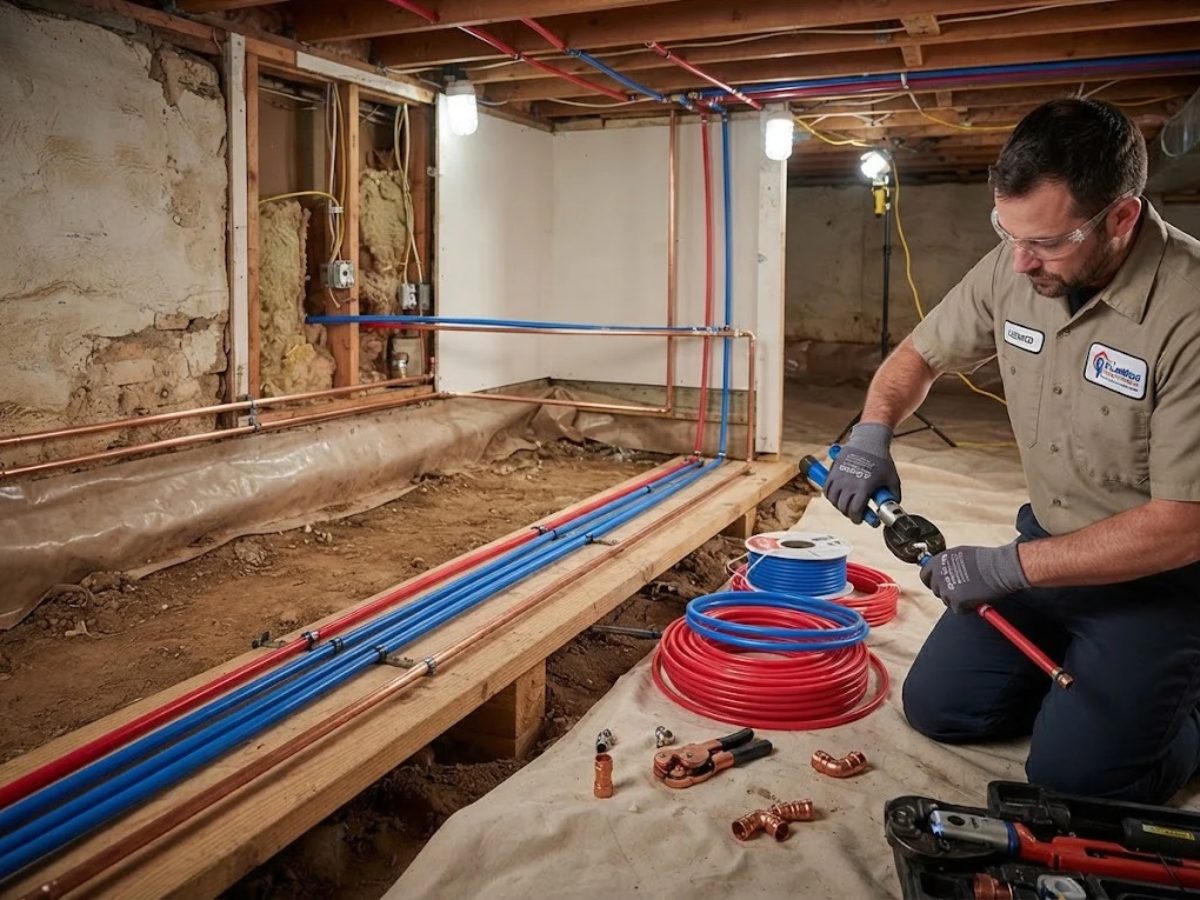
When a home's internal supply lines are failing in multiple places, repiping the whole system is often more cost-effective than repeated individual repairs. We replace galvanized and polybutylene piping with modern copper or PEX. We'll also identify any fixtures or appliances that need to be temporarily disconnected during the project and walk you through the day-by-day plan before work starts.
Local Cause.
Brea homes built in the 1960s and 70s near Downtown and Country Road were built with galvanized steel supply lines, which corrode from the inside over 40-60 years. A home at or past that age with recurring leaks or declining water pressure sitewide is a strong repipe candidate rather than a series of one-off repairs.
Blackstone's 2000s-era homes were built with copper or early PEX rather than galvanized, so a full repipe there is rarely age-driven the way it is in Downtown Brea, it's more often tied to a specific defect or damage event.
Symptoms.
- Recurring leaks at different points in the home.
- Declining water pressure sitewide.
- Rust-colored water from multiple fixtures.
- Visible corrosion on exposed pipe sections.
How we diagnose it: We map the existing supply line layout, assess wall and ceiling access, and typically run new lines through existing wall cavities where possible to minimize drywall repair.
Repair Approaches.
PEX repiping.
Faster installation, more flexible routing, and typically lower cost than copper.
Copper repiping.
Higher upfront cost, longer proven lifespan, preferred by some homeowners for resale or personal preference.
How Do You Know If You Need a Full Repipe Instead of Another Repair?.
If you've had more than one or two supply-line leaks in the past couple of years, or your whole house has lower water pressure than it used to, that points to widespread internal corrosion rather than an isolated failure. We'll assess the visible pipe condition and repair history honestly rather than recommending a repipe by default.
On The Visit.
We start by mapping your home's existing supply line layout and assessing wall and ceiling access, then walk you through PEX versus copper with real cost and lifespan differences for your specific home. Where possible we route new lines through existing wall cavities to minimize drywall repair, and we coordinate patching as part of the project.
Emergency Call or Schedule It?.
This is a planned project rather than an emergency response, typically scheduled after a pattern of repeated leaks has made the case for a full repipe over continued spot repairs. Either way, call (714) 750-8637 and we'll tell you honestly which one applies.
What Repiping & Whole-Home Pipe Replacement Typically Costs.
Every job gets a firm price before work begins. Most homeowner insurance policies only cover water damage from a sudden, accidental event, not gradual wear, ask your insurer about your specific policy.
What affects your price:
- PEX versus copper, copper costs more upfront but has a longer proven track record.
- Home size and number of fixtures being connected.
- Wall and ceiling access, more finished space means more drywall repair after.
- Whether the project is done in stages to maintain partial water service.
FAQs.
A repipe is a significant investment, so we'll only recommend it when the repair history and pipe condition genuinely support it over continued spot repairs. If the problem is specifically the underground line from the meter to the house rather than internal plumbing, see water line repair and replacement instead. This is a common need in the older parts of Downtown Brea with original galvanized supply lines.
Parts and labor on completed repiping & whole-home pipe replacement work are covered under our standard workmanship warranty, and every job gets a firm, written price before we start, not an estimate that changes once the work is underway.
All repairs are performed to the standards of the California Plumbing Code (based on the Uniform Plumbing Code, UPC).